ArtStation – Character Design Narrative Illustration from Concept to Final Free Download
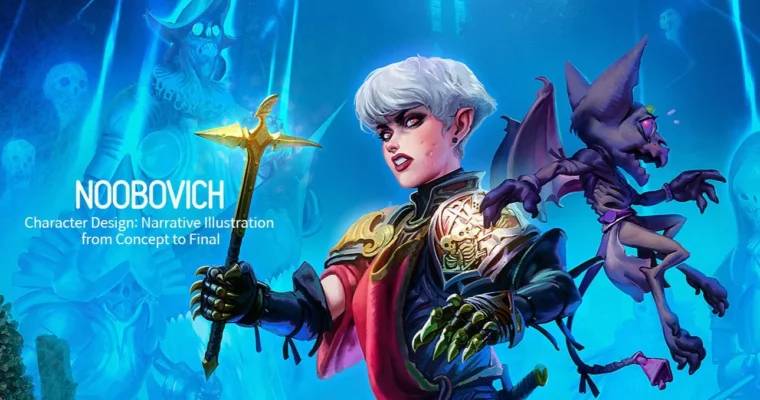
A strong character design becomes far more compelling when the character exists within a believable world. Rather than presenting a figure on a blank background, a narrative illustration can communicate personality, history, environment, and story through clothing, props, composition, and visual details. Character Design: Narrative Illustration from Concept to Final by ibrahem swaid is an ArtStation tutorial that explores this process from the earliest concept stage through to a finished illustration.
The course is aimed at artists who want to strengthen both their character-design skills and their ability to build a complete storytelling image. It covers research, concept development, composition, 3D posing, photobashing, painting, rendering, and final colour adjustments as part of one connected workflow.
What Is Character Design: Narrative Illustration from Concept to Final?
This ArtStation course focuses on creating a narrative-driven character illustration rather than treating character design as an isolated exercise. The artist develops a character from an initial idea, establishes a backstory and visual identity, and then places that character into an environment that supports the story.
ArtStation lists the tutorial as intermediate level, consisting of 11 chapters and 20 hours 27 minutes of instruction. The course is designed around taking a character concept beyond a simple character sheet and developing it into a detailed finished illustration.
Research and Developing the Initial Idea
The workflow begins with planning and research. Students learn how to write an idea brief, gather references, create a character chart, organise their workspace, and begin narrative sketching.
This early stage establishes the foundation for the rest of the project. Instead of immediately rendering a character, the course demonstrates how references and visual exploration can be used to discover the character’s appearance, personality, and story context.
Character Concept and Visual Development
Once the initial direction is established, the course moves into character development. Students explore character concepts, combine references, work with flat colour, and develop the main character into a final design.
The lessons also introduce ArtBreeder as part of the concept-development process. Additional character exploration includes enemies and supporting elements such as a fairy, helping demonstrate how a narrative illustration can contain more than one visual subject.
Building the Scene and Composition
A character becomes much more interesting when the surrounding composition reinforces the story. The course therefore dedicates a section to developing the scene itself.
Students work through reference gathering, composition sketches, scale adjustments, and value studies. These exercises help establish where the character sits within the image and how the surrounding environment can support the focal point before detailed rendering begins.
Using DAZ Studio for Character Posing
The tutorial also incorporates DAZ Studio during the scene-development stage. Students are shown how to work with the camera and lighting and how to pose the character.
Using a 3D reference can provide a practical foundation for perspective, anatomy, lighting, and complex poses. The course demonstrates how this 3D material can support the final 2D illustration rather than replacing the artistic process.
Inking and Flat Colours
After the scene and character have been established, the tutorial moves into inking and flat colouring. Students work on the main character, supporting elements, and background before beginning the more extensive rendering stages.
This separation between clean foundational shapes and later rendering helps maintain control over the image. It also provides a clear structure for introducing photographic textures and painted details without losing the original design.
Photobashing and Texture Integration
One of the major subjects in the course is photobashing. Students are introduced to using photographic material alongside painted elements to develop the environment and add detail.
The course covers planning the illustration, creating an underpainting, working on foreground elements, and building the background with photographic textures. It also explains how to organise folders and manage texture resources so that the growing illustration remains workable.
Rendering Characters and Environment
The rendering stage focuses first on the main character and then expands into the surrounding elements. Lessons cover rendering areas such as the head, armour, hammer, and waist, followed by additional rendering work for the fairy, undead characters, flying skulls, and light beams.
This demonstrates how different materials, characters, and environmental effects can be developed within a single visual style while maintaining the overall narrative composition.
Final Touches and Colour Adjustments
The final chapter brings the image together through finishing work and colour adjustments. Rather than stopping once the individual objects are rendered, the course demonstrates the importance of evaluating the entire illustration and making final changes that improve consistency and presentation.
This final stage is particularly relevant to artists who often produce technically detailed artwork but struggle with unifying all the elements into one convincing image.
Files and Course Materials
The ArtStation listing contains 68 files, including the lesson videos and supporting project resources. Included materials shown on the product page include a PSD file, JPG resources, and process images alongside the video lessons.
The standard licence is currently listed at $45, with the tutorial licensed for a single user.
Who Should Take This Course?
This tutorial is well suited to concept artists, character designers, digital painters, illustrators, and artists who want to create more narrative-driven work. It is especially useful for people who understand basic character drawing but want to improve their ability to combine characters, environments, references, textures, and storytelling into a finished composition.
Final Thoughts
Character Design: Narrative Illustration from Concept to Final offers a complete workflow for turning an initial character idea into a detailed storytelling image. Its emphasis on research, character development, composition, DAZ Studio, photobashing, painting, and final colour correction makes it broader than a conventional character-design tutorial.
For artists looking to move beyond isolated character drawings and create concept art with stronger narrative context, the course provides a practical example of how the different stages of an illustration can connect into one finished piece.
ArtStation character design course, narrative illustration course, character concept art, digital painting course, concept art tutorial, photobashing tutorial, character illustration course, DAZ Studio concept art, Photoshop concept art
ArtStation – Character Design Narrative Illustration from Concept to Final Free Download
https://zeroupload.com/4fd8f7deeb11996a3faf3a1ad5a88dd5
https://pixeldrain.com/u/7RhYkYNQ
https://filekeeper.net/olqgz83tj008/AS_ChDesNarIll_DownloadPirate.com.rar